CoinDCX — Web3 Mode (DeFi Access Layer)
28 February, 2026
CoinDCX introduced Web3 Mode to give exchange users access to on-chain markets without requiring a fully self-custodial wallet.
The objective was to unlock earlier exposure to newly launched tokens and higher-volatility opportunities that weren’t available on the exchange.
However, shortly after launch in October 2024, adoption dropped sharply. Within weeks, approximately 65–70% of users abandoned the experience.
Oct 2024 - June 2025
Users
$TRUMP Launch (January)
Activated
Acquired
Drop off rate
Source: Mixpanel (CoinDCX Web3 analytics)
Drop off rate
My Role
I was brought into the project after launch, when adoption began declining. As a Senior Product Designer with prior experience working on Okto (CoinDCX’s fully self-custodial wallet). I was pulled in to help diagnose and simplify the Web3 experience.
My focus was on identifying friction in the first trade journey and redesigning it to improve activation and retention.
Problem
We identified distinct failure points across the lifecycle journey of a user.
Exchange
Entry
Web3 mode
Wallet (Deposit funds)
Market
Trade
Select Coin
Select Chain
Confirm buy
Buy
Drop off
Drop off
Web3 mode - Infrastructure
Depositing funds (Entry Was Cognitively Heavy)
Exchange users were used to buying assets directly using INR.
In Web3 Mode, they suddenly had to:
Deposit INR
INR converted to USDT on Exchange
Exchange mode → Web3 mode
USDT transferred to Web3 wallet
USDT Chain selected

Buy desired Coin on Web3 wallet
Current deposit flow → trade flow
Before users could act on their intent, they were required to understand how the system worked.
This created a mismatch between expectation and experience. Exchange users thought they were trading. The product asked them to manage infrastructure.
For many, this was the first interaction with Web3. Instead of seeing value quickly, they encountered friction immediately. Drop-off at this stage was not due to lack of interest, it was due to cognitive overload before reward.
Execution Felt Unpredictable
Next, users who deposited successfully, suffered during trade execution.
To prevent failed transactions, we set a fixed slippage of 25% across all swaps. The thinking was simple: fewer failures would mean less frustration. It worked! trades went through. But something went wrong…
During volatility, users received noticeably different prices than expected. The quantity they saw at confirmation didn’t always match what they had in mind when placing the order.
We tried to solve one problem and created another, leading to users having doubts. Some even considered we were scamming them.
Wallet Access Felt Fragile
Web3 is often positioned as giving users greater ownership and control over their assets.
However, in our implementation, access depended entirely on a single Google account. If users lost access to that account (eg; work mail), they permanently lost access to their wallet and funds.
For users who entered Web3 expecting greater safety and ownership, the product did the opposite.
Design Principle
Instead of teaching users Web3 mechanics, we reframed the goal:
Web3 Mode should behave like trading, not asset management.
Every decision followed three principles:
Reduce invisible complexity
Restore control during transactions
Make ownership feel safe
Goals

1
Enable direct INR purchases for Web3 tokens
2
Give users execution control through adjustable slippage
3
Introduce reliable wallet recovery
Most of the design challenge here wasn’t creating new UI, it was deciding what complexity users should never have to see.
Solutions
1
Buying Web3 coins with INR
Users weren’t failing because Web3 was new. They were failing because the first action required too much commitment. Activation demanded multiple unfamiliar decisions before users saw value.
So we simplified the first decision:
Deposit INR
INR converted to USDT on Exchange
USDT transferred to Web3 wallet
USDT Chain selected

Buy desired Coin on Web3 wallet
Pushed to
Backend
Direct buy with INR flow


Before (Live)
5 step process
After (Live)
Direct buy (3x faster)
What Changed
₹
We abstracted blockchain complexity into the backend and enabled direct INR purchases.
Key decisions:
INR-supported tokens clearly labeled
CTA reinforced availability (“INR Supported”)
Flow aligned with exchange behavior users already trusted
Legal & Trust Challenge
Since INR cannot exist on-chain, the legal team raised concerns around how the transaction would be perceived by users. Transparency became critical.
Instead of exposing the underlying complexity, we introduced short contextual education explaining how the purchase was executed in the background.
Trust increased without increasing cognitive load.
First time user experience
To reinforce this further, the final payment step was routed through a CoinDCX-hosted gateway, making it clear the transactions in BE were still happening within the exchange.
CoinDCX hosted portal
Alternative approach
We also explored more visually expressive ways of explaining the process. However, placing this explanation later in the order flow introduced unnecessary friction at the moment users were ready to execute.
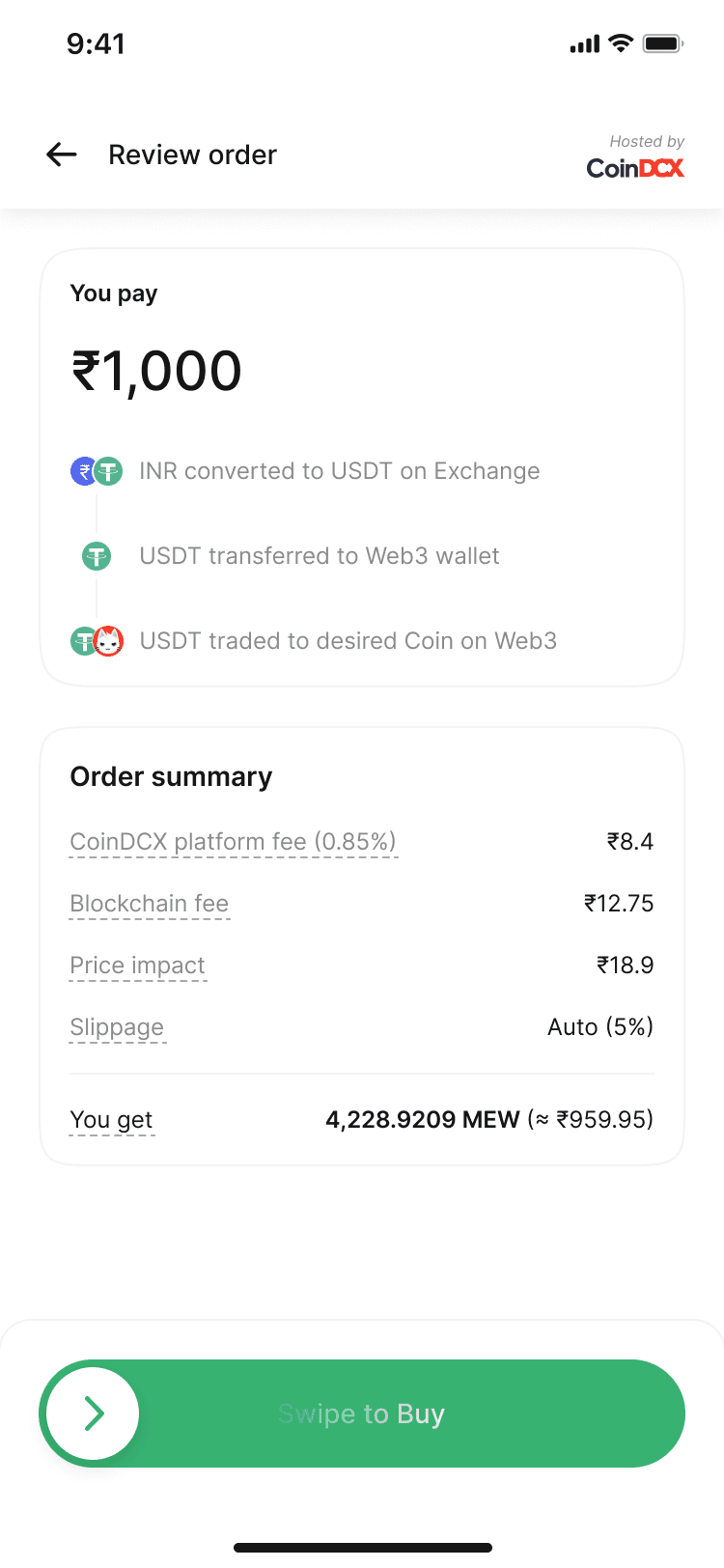
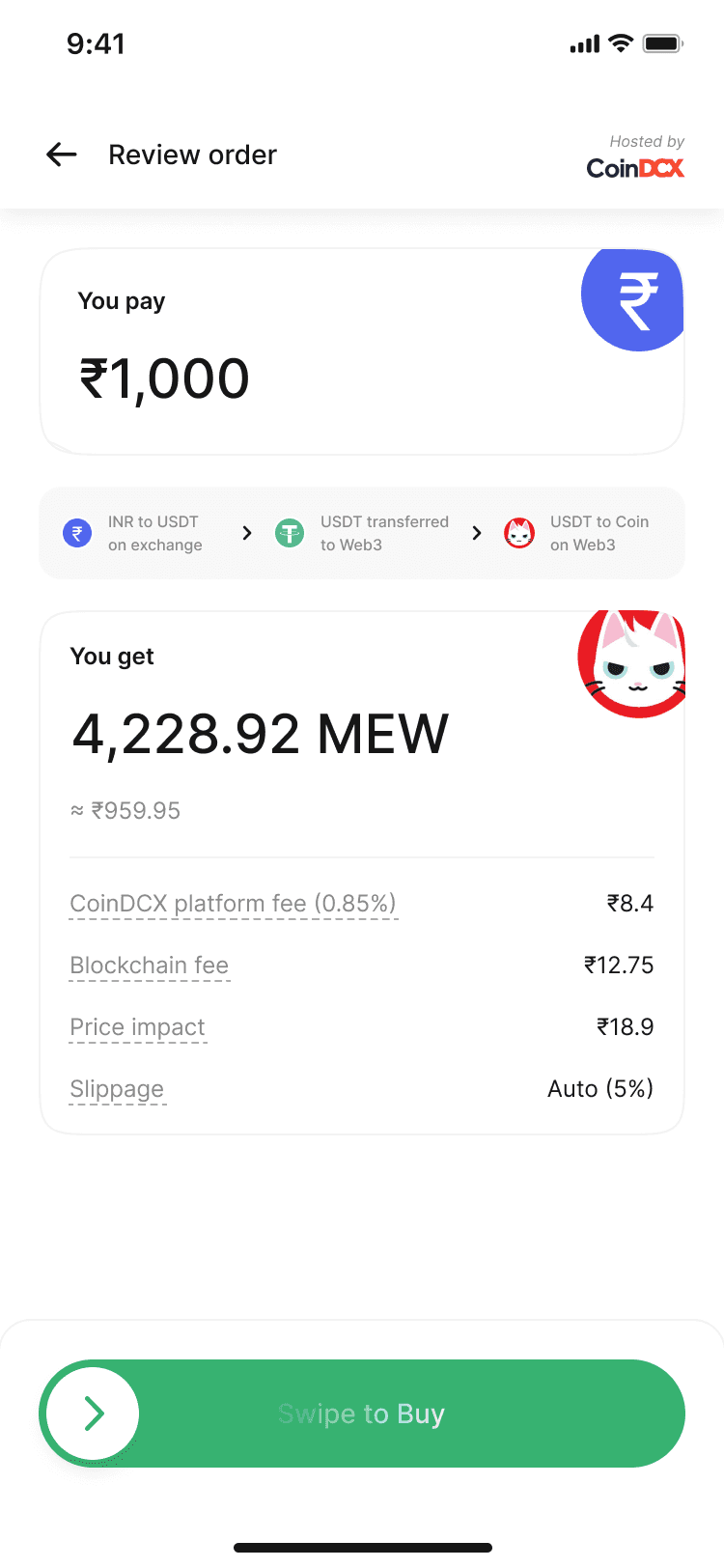
CoinDCX hosted portal
A Bold Decision
Removing blockchain information from the swap screen.
Previously:
Chain selection increased hesitation
Most users ignored or misunderstood it
Since execution moved to backend abstraction, showing chain details created anxiety without improving decisions.
We removed it.
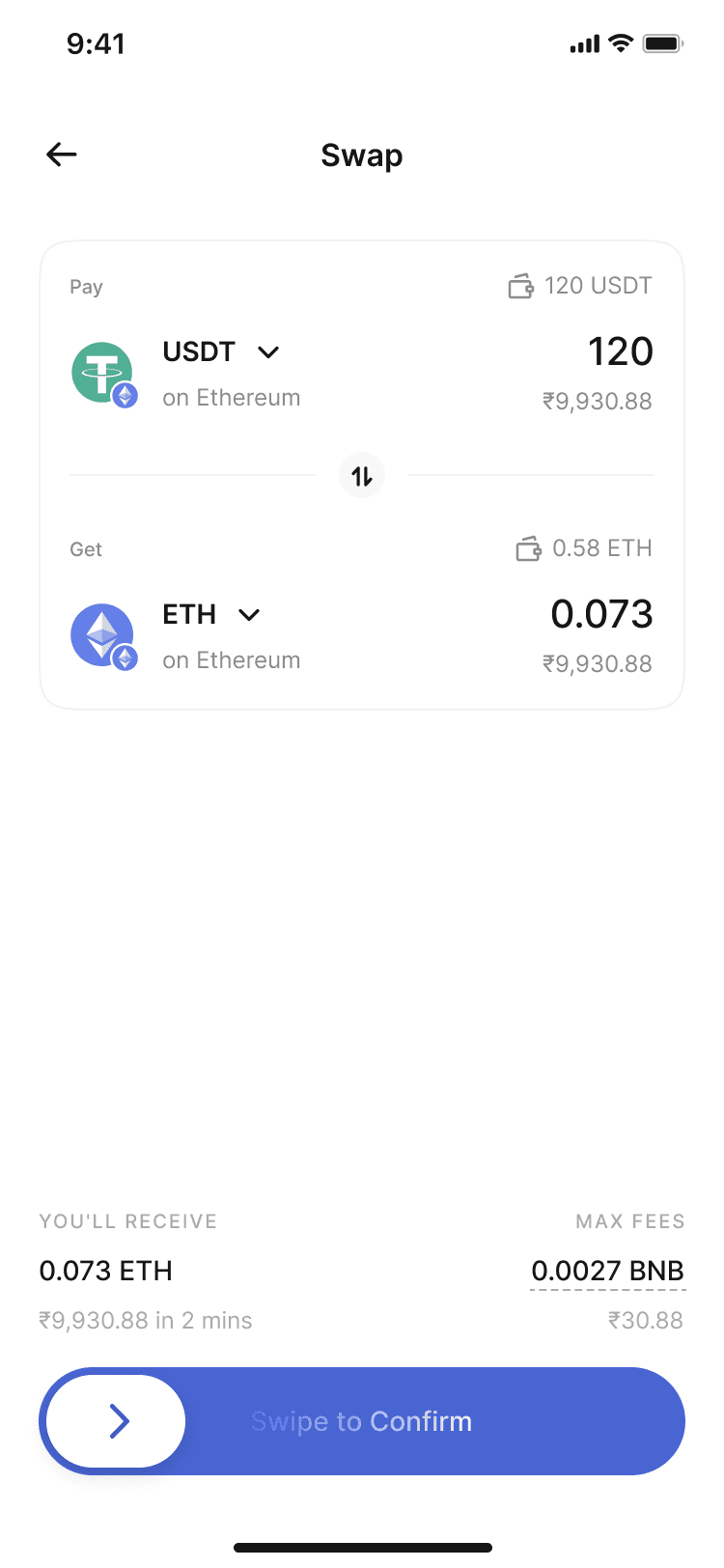
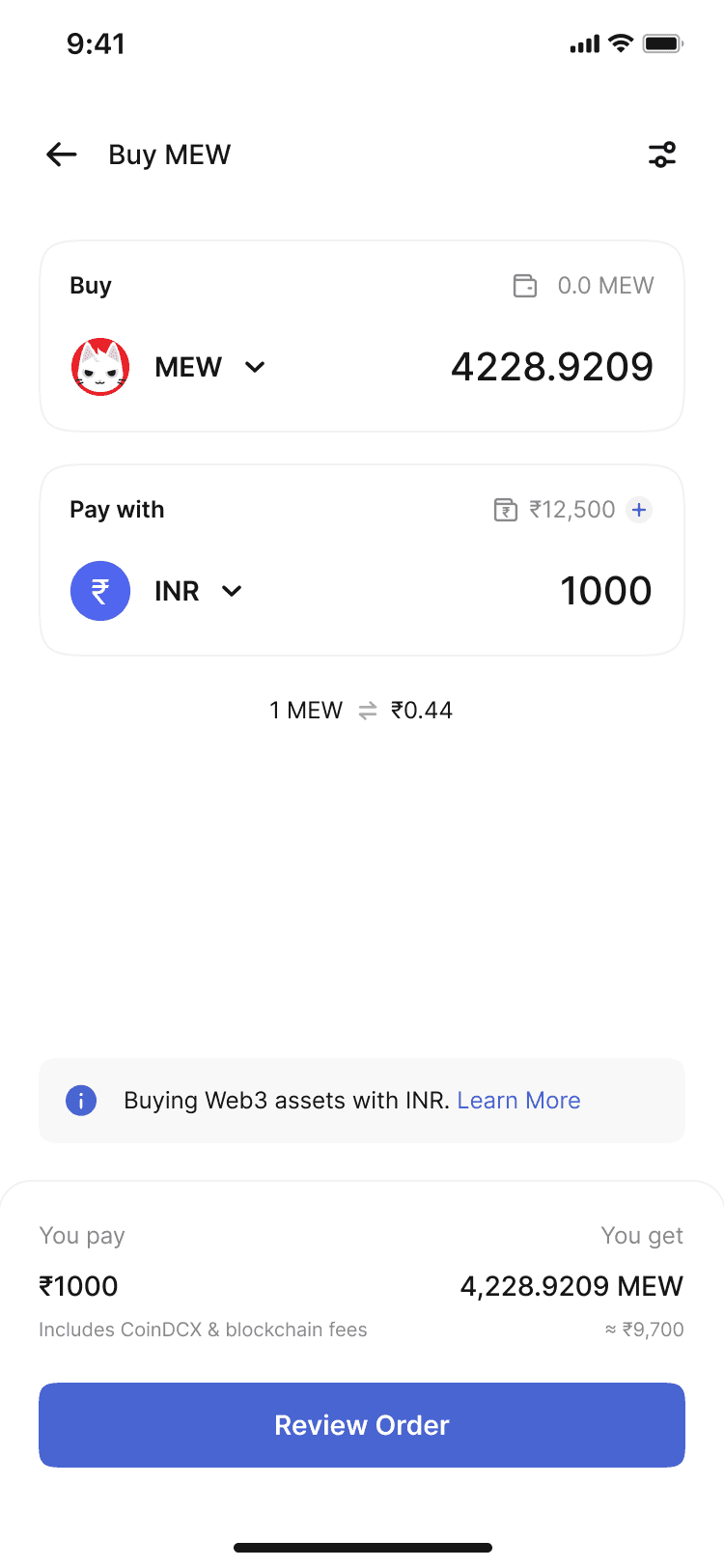
Before
After
Go-to-Market Support
We introduced entry points across the exchange:
Banners
Search prompts
Portfolio announcements
This positioned Web3 as an extension of trading rather than a separate product.
2
Adjustable Slippage
A small group (~2%) generated the majority of trading volume. These users needed precision when markets moved.
To prevent failed transactions, we had previously set a fixed slippage of 25%. Orders almost always went through, but the outcome often surprised users. Prices shifted, quantities changed, and the final trade didn’t always match what users expected.
We replaced the fixed tolerance with adjustable slippage directly in the swap flow.
Safe auto defaults protected most users, while experienced traders could adjust tolerance when volatility required it.
The goal wasn’t customization.
It was restoring control at the moment of execution.
Live Slippage flow
Explored Alternative
We prototyped a visual interaction explaining slippage dynamically. While expressive, it slowed decision-making.
We chose the simpler interaction above.
3
Wallet Safety & Recovery
Ownership without recovery feels dangerous. Users were unintentionally locking themselves out by using temporary Google accounts (e.g., work emails).
Funds became inaccessible. This was both a usability and trust crisis.
Solution
We introduced multiple recovery options:
Downloadable private key file
Offline backup guidance
Explicit warnings against unsafe storage
Recovery became a deliberate step instead of an implicit risk.
Wallet recovery flow
Tradeoff
My preferred solution was secondary email recovery. However, engineering bandwidth and urgency required a faster safeguard. We shipped the private-key backup first to immediately reduce risk exposure.
We had also compensated all the users who had lost funds intitally.
Edge cases
If users reactivated their account with a different email ID, we surfaced warnings reminding them that their Web3 wallet was tied to the original login.
Email link warning
If they still chose to proceed and couldn’t access the wallet, they were prompted to restore it using their recovery file.
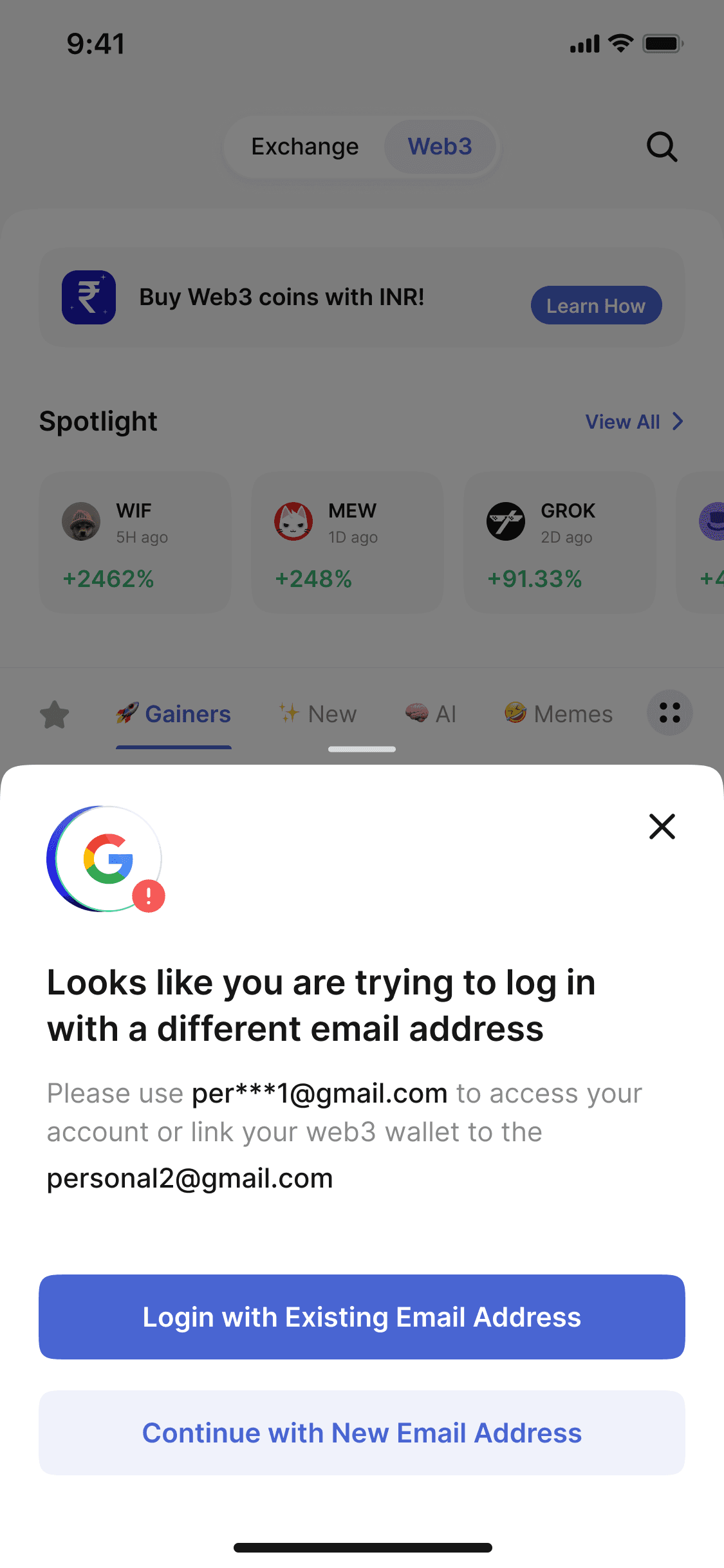
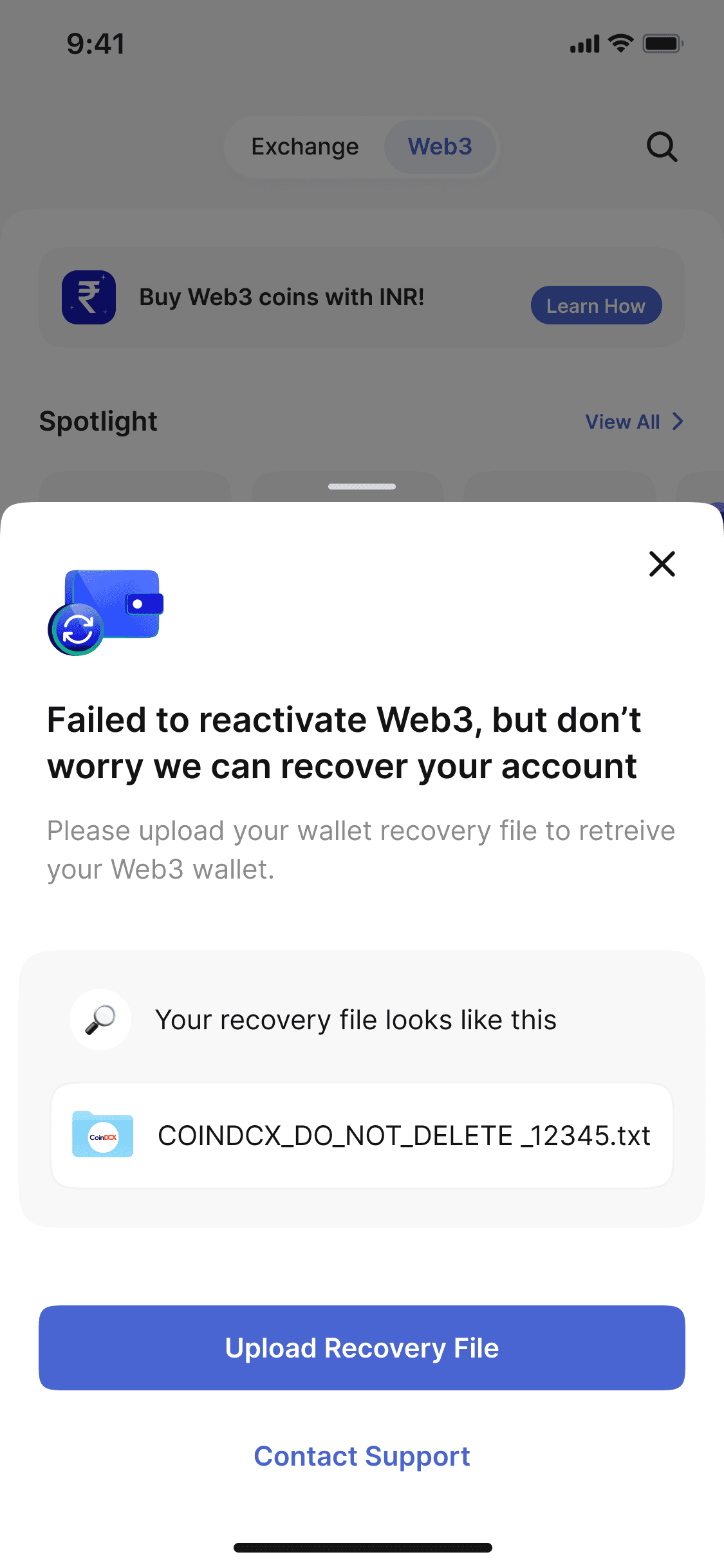
Wrong email link
Last resort when nothing works
Impact
Newly activated portfolios (first trade completed) increased by 112% within two months after introducing INR.
70–80% of first-time trader volume executed through INR, validating the simplified buy flow
$3–4M weekly trading volume across Web3 markets
93% order success rate with ~21s median transaction time
Wallet loss incidents reduced to near zero
Together, these changes helped transform Web3 Mode from a high-friction experiment into a reliable trading pathway for exchange users.
Oct 2024 - Sept 2025
Users
$TRUMP Launch (Jan)
Redesign release (June)
Activated
Acquired
Source: Mixpanel (CoinDCX Web3 analytics)
After redesign
Reflection
If revisiting this today, I would explore blending Web3 directly into the exchange rather than maintaining a separate mode.
While simplifying Web3 Mode improved activation, the separation still introduced a mental shift for users. Their intent remained the same (trading) but the product suggested they were entering a different system.
The biggest learning was that adoption in new tech rarely fails because of capability, it fails when confidence is missing.
Design’s role was to restore that confidence.
What's next?
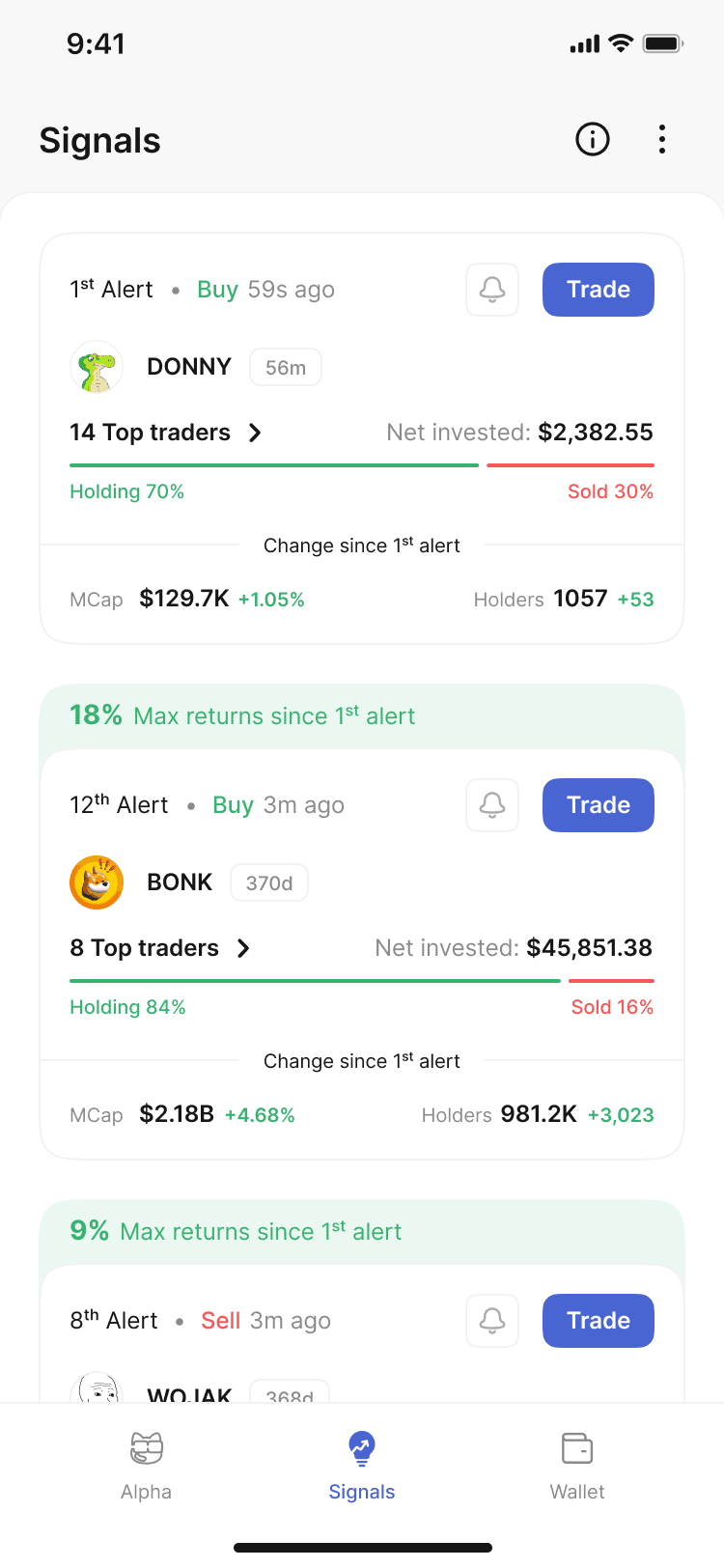
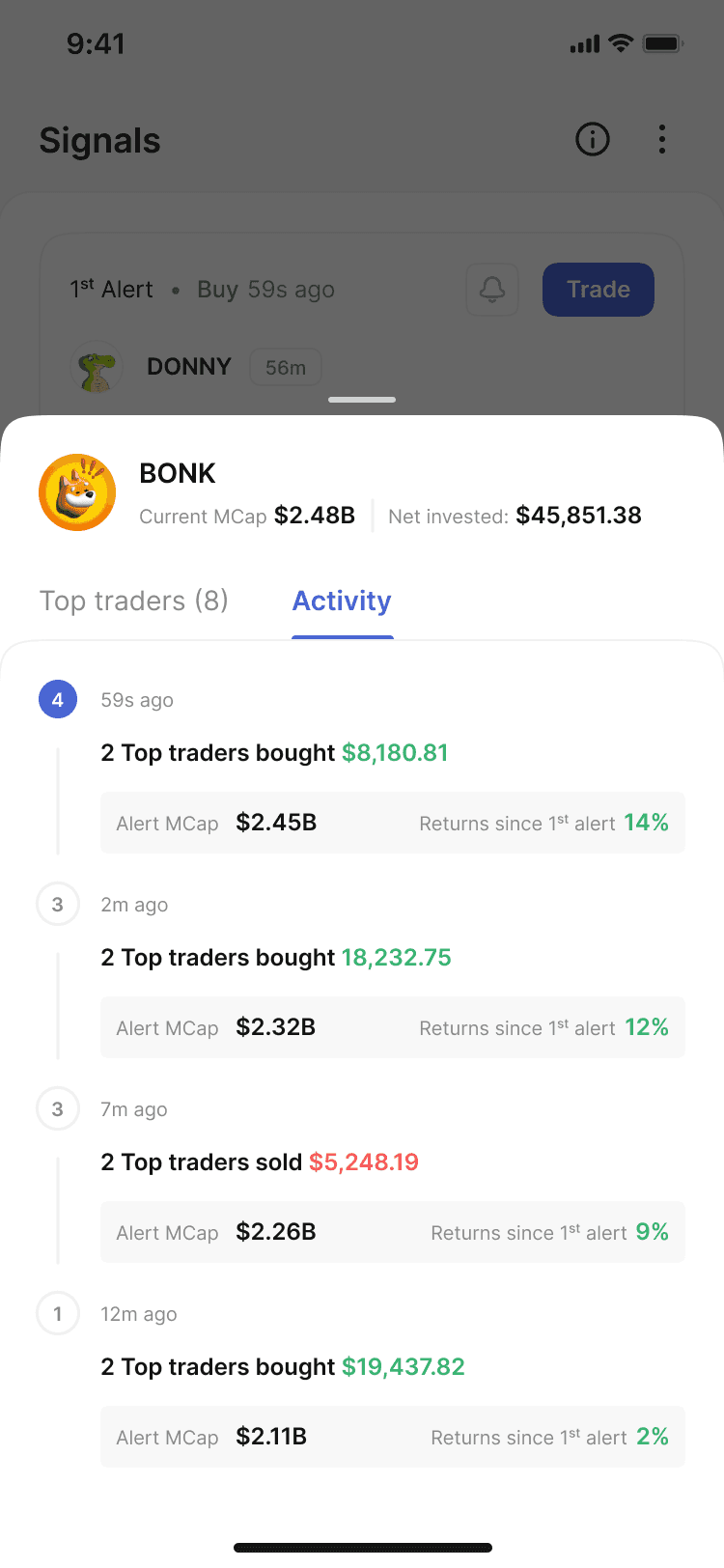
With the foundations of Web3 trading stabilized, the next focus was helping users make better trading decisions.
One direction we explored was Smart Money, a feature that surfaces trades made by top-performing wallets on the network. By identifying experienced traders and highlighting the assets they were entering or exiting, users could gain visibility into market signals they might otherwise miss
The goal wasn’t to copy trades blindly, but to give users a clearer view of where experienced participants were placing their bets.
Smart money